

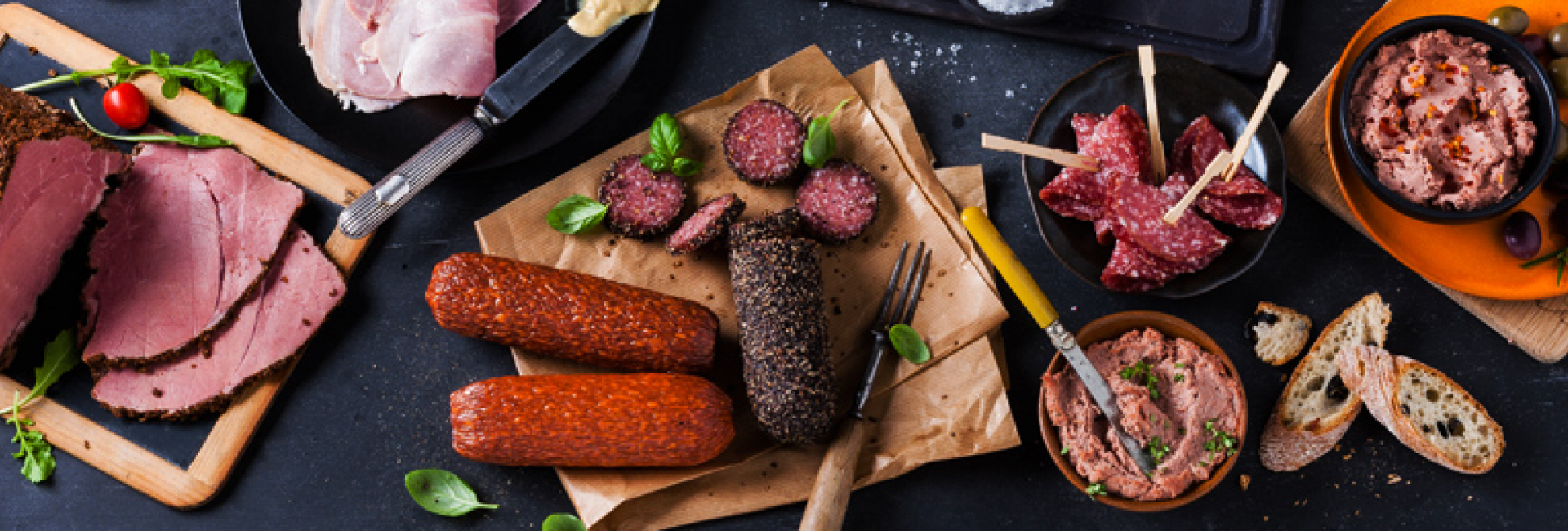
Cured and smoked meats have been around since the earliest time of man – one of the first recorded recipes for ‘salted pork’ comes from Cato the Elder, a Roman statesman and historian who lived 234BC to 149BC. But the technique of curing and smoking meat predates even the Romans – its purpose, by necessity, was to preserve certain protein-rich foods for longer periods of time that would otherwise go bad if not treated.
In curing, cuts of meat are treated with a salt solution which reduces the amount of water present – less water means less room for bacterial growth. In smoking, three forms of preservation are employed: the first is heat (time and temperature dependant) which kills bacteria; second, the smoke releases certain chemical compounds which have an antimicrobial effect; and third, because the outer surface of the meat dries out, again the reduced presence of water limits the growth of bacteria. Some of the earliest and better known smokers were the Caribbean natives whose meat-smoking setup was called ‘barbacoa’ – the etymological origin of today’s ‘barbecue’.
Today meat is cured and smoked for taste rather than convenience – think mouth-watering pastrami, a meat (usually beef) which is cured; partially dried and seasoned; and then smoked and steamed. Or delectable salami, a dry sausage which relies on the combination of lactic acid fermentation with curing salts to produce a delicacy of greater longevity, taste and colour. Kasseler chops are another firm favourite, German in origin, these are cuts of pork first cured and then slightly smoked. Also very popular and prepared to N1 exacting standards in their separate Halaal factory is macon – similar to bacon, but prepared from beef, it is also cured by seeping in large quantities of salt or brine.
For all your cured and smoked food needs, from the afore-mentioned pastrami, macon and salami, to smoked chicken and gypsy ham, be sure to call N1 today.